The Aspirations Network
A living map of the people, organisations and intentions shaping our shared future - and how to find the ones aligned with yours.
Aspirations are the most underused signal in any system. We've built a network that takes them seriously.
For people looking for their people
Find others who care about what you care about. The network maps shared intent across communities and disciplines, so you can step into conversations alongside the people already having them - without algorithms, follower counts or noise.
- Discover communities aligned with what matters to you
- See who else is working on the same questions
- Step in without having to start alone
For researchers working across disciplines
Connect with researchers whose questions and intent align with yours - regardless of department, discipline or institution. The network surfaces the cross-disciplinary overlaps that rarely happen on their own: the conversations that don't take place because the right people never meet.
- Find collaborators by aspiration, not just by keyword
- See cross-disciplinary clusters around shared questions
- Connect through open, verified scholarly identities
For institutional leaders and investors
Organisations rarely fail because of misaligned outputs - they fail because of misaligned intent. The network maps relationships between organisations through the missions, people and commitments that connect them, giving leadership and capital allocators a clearer view of where partnerships and investments will actually compound.
- Assess mission alignment between organisations at a glance
- Identify partnership and co-investment opportunities
- Map the intent behind organisational commitments
For builders and technologists
An open, typed graph of people and organisations linked by aspiration, affiliation and stated intent. Built on public data and designed for federation, query and contribution - with projects on the roadmap as a third node type and collaborator-matching as a first-class capability.
- Open, typed graph with provenance on every relationship
- Built on public sources, designed for federation
- Ready for downstream tooling and query
What you'll see
The network can be viewed at different levels - from a single person and their immediate connections, through to the structure of an entire field.
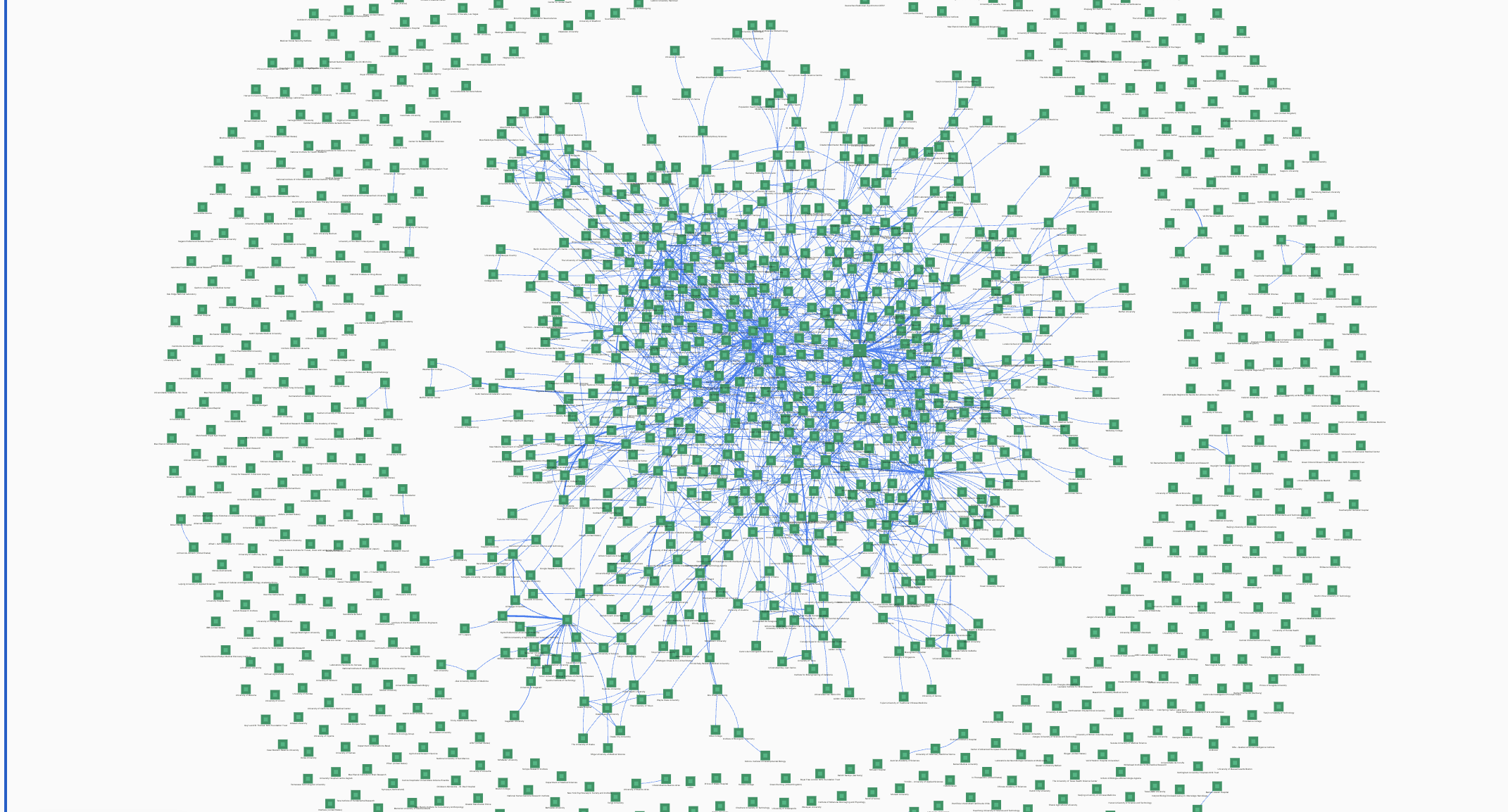
Organisations view
A map of how institutions connect - dense central clusters surrounded by an outer ring of organisations yet to declare their links.
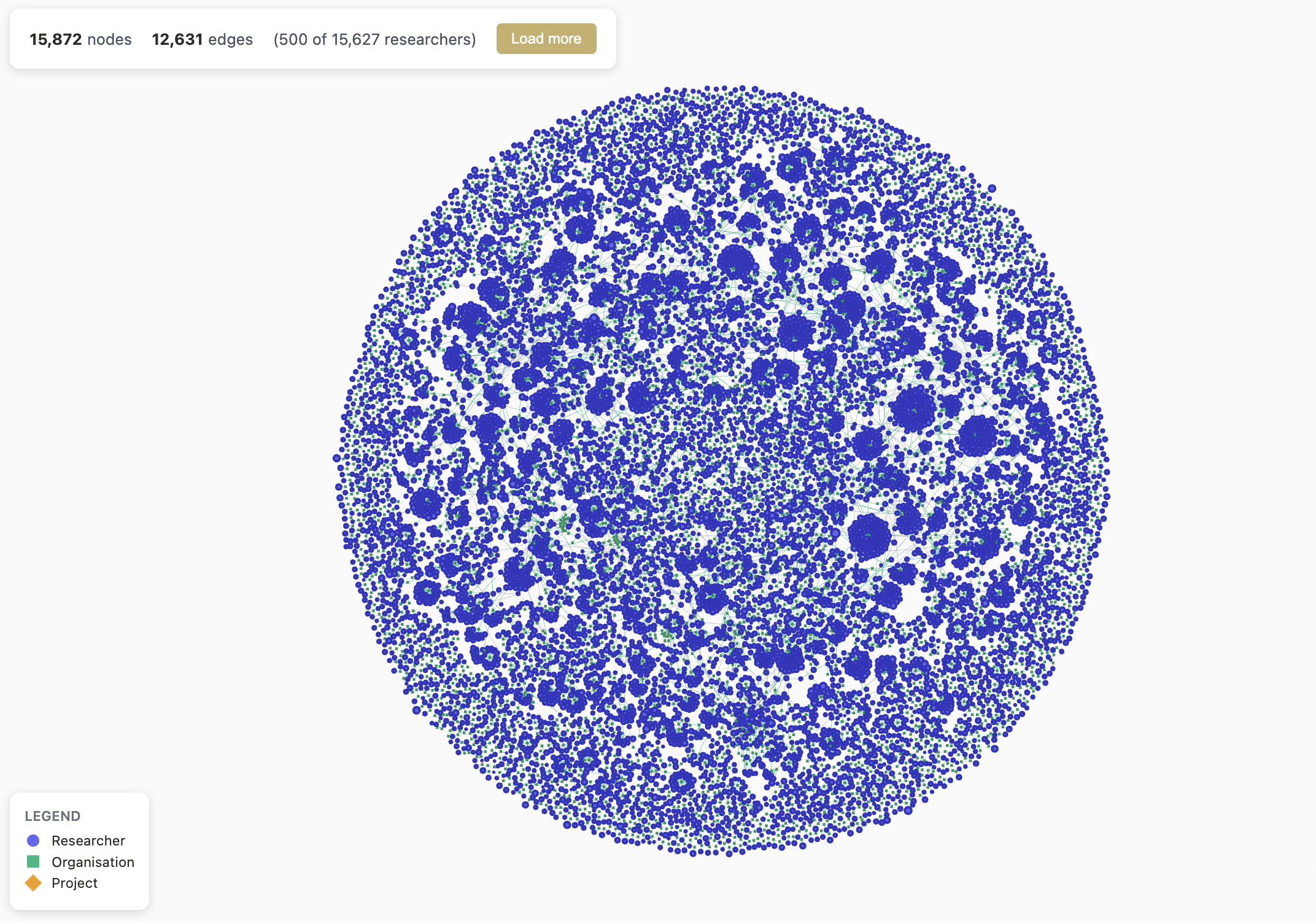
The whole network
People and organisations together at scale - the structure of a field emerging as the graph loads.
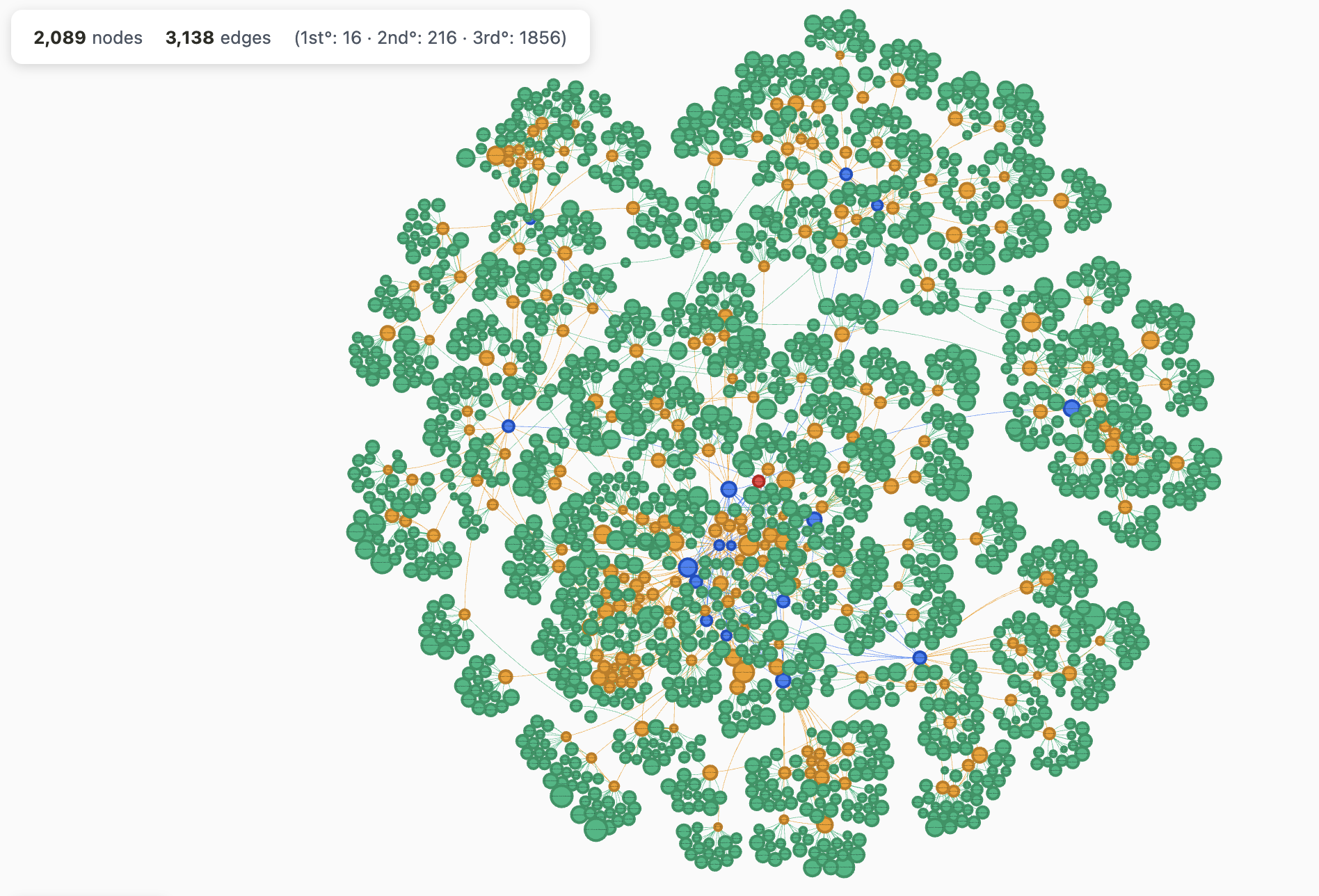
Your ego-network
Start from one person and expand outward by degrees of separation across people, organisations and (soon) projects.
A worked example: institutions at a glance
Lift the network up to organisation level and the underlying structure of a sector becomes visible. Densely connected institutions cluster at the centre; organisations on the outer ring sit at the edge of the field - either a frontier worth investing in, or a partnership not yet made.
- See the institutional shape of a field in a single view
- Spot densely-connected hubs and under-served edges
- Move from a list of organisations to a map of how they relate
Aspirations as digital public infrastructure
Search engines index pages. Social platforms index attention. Almost no one indexes intent - the thing that actually moves people, organisations and capital toward a shared future. The Aspirations Network is built as public infrastructure for that signal: open by default, owned by the communities who use it.
- Connecting across biases of discipline, sector, language and geography
- Surfacing alignment that platforms hide behind engagement loops
- Treating intent as a public good, not a proprietary signal
A living systems approach
Aspirations aren't static. People grow into new questions, organisations rediscover their missions, and the relationships between them shift over time. The network is built to behave the same way - learning from contributions, rebalancing as communities form and reform, and reflecting the people inside it rather than a fixed taxonomy imposed from outside.
- Adaptive - reshapes as intent and evidence change
- Participatory - contributors steward their own nodes
- Plural - many ways into the same network of relationships

Be among the first
Register your interest and we'll be in touch when the Aspirations Network launches