What working from home has done to the boundary between effort and rest — and why the exhaustion that follows is not a personal management problem
Published: 13 April 2026Updated: 3 days, 14 hours ago14 min read
ByNeuro
Levels of ScaleOrganisation
LensLiving SystemsWork Ethic
Wellbeing DimensionProfessional
System of WellbeingFair Organisations
Regenerative Development GoalsRDG 8 - Meaningful Livelihoods
Quick summary
For many people, the promise of working from home was straightforward: less commuting, more flexibility, a better fit between the shape of the working day and the shape of a life. For many of those same people, something else has gradually emerged alongside those benefits — a difficulty switching off that goes beyond individual discipline, a tiredness at the end of the day that feels different from the tiredness that used to follow a day in the office, and a growing sense that the home, which was supposed to become a more humane place to work, has instead become a place where work never quite ends.
Remote work burnout describes what happens when the structural conditions of remote and hybrid working — the absence of physical boundaries, the always-on availability of digital communication, the collapse of commute as an involuntary transition ritual — erode the recovery that the nervous system requires between periods of sustained effort. This is a story about the conditions in which remote work is taking place, and what those conditions ask of human biology.
This article explores what remote work burnout actually is, how it operates in the brain and body, why the specific features of remote digital work make burnout so much easier to develop, and why understanding it clearly — as a structural and organisational challenge — is the foundation for responding to it in ways that might actually help.
The working day that never quite ends — and the tired feeling that sleep alonedoesn'tfix
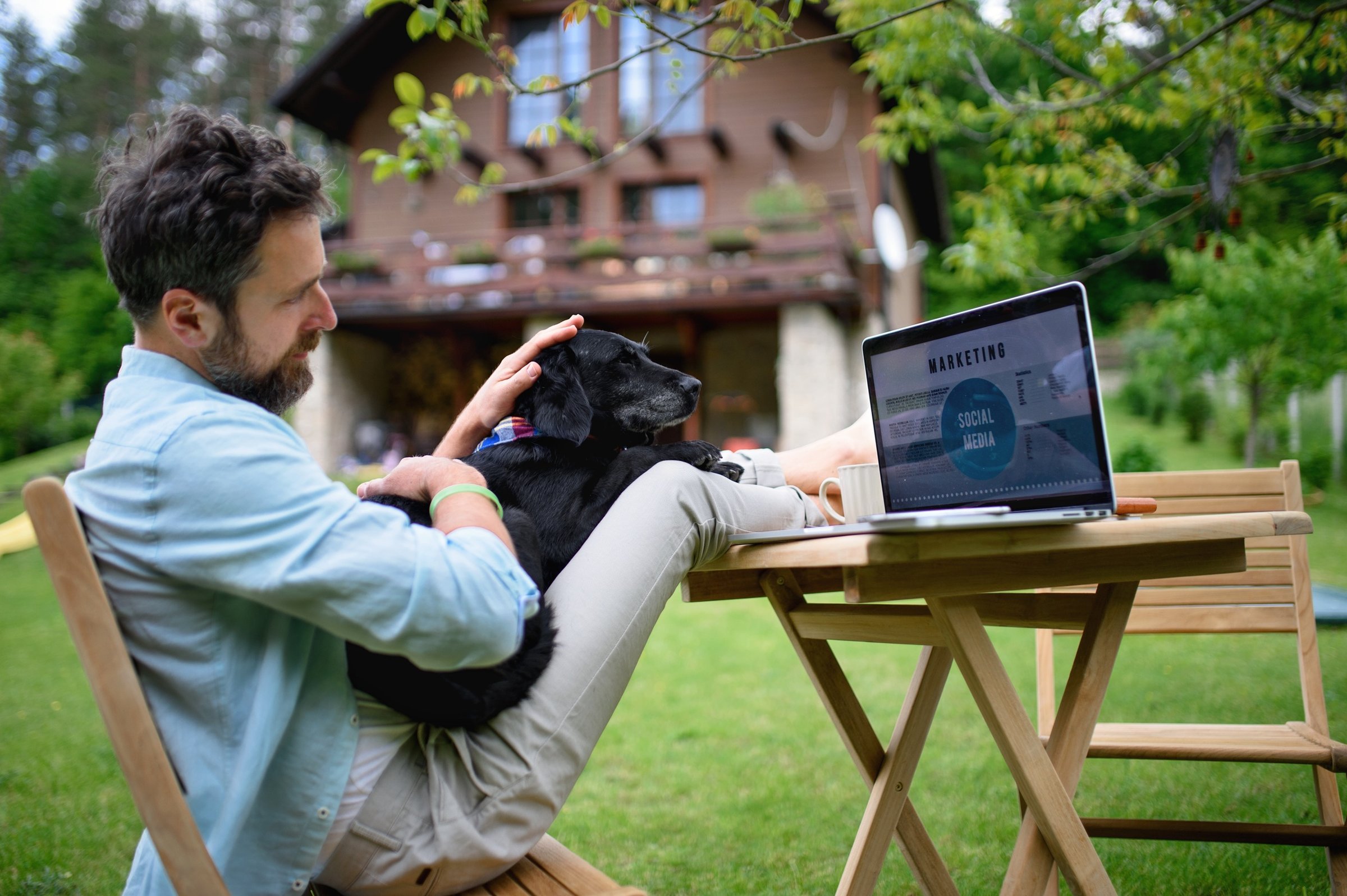
There is a particular quality to the end of a remote working day that many people have learned to recognise. The laptop closes. The last message has been sent. The formal structure of the day is technically over. And yet something lingers — a background hum of unfinished business, an awareness that the inbox is still filling, an inability to fully arrive in the evening that follows. The home that was supposed to offer flexibility has become, in some quieter sense, the office. The office just happens to have a sofa in it now.
Many remote workers describe a tiredness that doesn't quite match the shape of what they've done. There was no commute, no difficult meeting room, no long journey home. The physical demands were minimal. And yet by the end of the day — or sometimes by mid-afternoon — something has been used up that doesn't replenish easily. It is a particular kind of exhaustion: the kind that accumulates when recovery is repeatedly prevented rather than simply delayed.
Understanding why this happens — and why it is so widespread among remote workers — requires looking at what the transition to remote and hybrid working actually changed. Logistically and biologically. The features of the working day that kept work and rest separate, for many people, the structural scaffolding that allowed the nervous system to move between effort and recovery — without them, it can struggle to do either fully.
Burnout is what happens when the effort-recovery cycle breaks down and cannot complete
Burnout is one of the most commonly used and least precisely understood terms in everyday working life. In its most established formulation, burnout involves three interconnected dimensions: exhaustion — the decrease of emotional and physical energy; cynicism or disengagement — a growing detachment from the work itself; and reduced efficacy — a diminishing sense that effort is producing meaningful results (9). These three dimensions tend to develop together, each compounding the others, and together they describe something different from ordinary tiredness — a state in which the capacity for sustained, engaged, purposeful work has been genuinely eroded rather than temporarily decreased.
At a biological level, burnout reflects the failure of the effort-recovery cycle. The nervous system is designed to alternate between states of activation — the sympathetic arousal that enables focused, responsive engagement — and states of recovery — the parasympathetic downshift that allows physical and cognitive resources to be replenished (5). Sustained performance, across any time period, depends on the reliable completion of this cycle. When recovery is repeatedly prevented — when the system remains in activation mode without adequate intervals of genuine rest — the resources that performance draws on are consumed without being recharged. What follows is a progressive exhaustion of the regulatory capacity itself (9).
Occupational health research has identified psychological detachment from work as one of the most significant predictors of recovery and next-day wellbeing (11). Psychological detachment means genuinely disengaging from work — not thinking about it, not monitoring it, not carrying the background readiness to respond that digital connectivity makes so easy to maintain (11). People who achieve genuine psychological detachment during non-work hours report greater energy, more positive affect, and higher performance the following day as a direct consequence of the nervous system completing its recovery cycle (11). The implication is important: recovery is an active biological process that requires conditions — including genuine disconnection — that remote digital work systematically undermines.
There is also the specific dimension that digital connectivity adds. Work-related smartphone use outside working hours has been linked to higher levels of emotional exhaustion — and, significantly, the link holds even when the phone is nearby but not actively used (10). The mere availability of work communication — the knowledge that messages may be arriving, that response is technically possible — is enough to prevent full psychological detachment. The nervous system maintains a background readiness that is itself a form of activation, consuming resources even in the absence of any specific task (10). This is the particular contribution of digital connectivity to remote work burnout: it does not require the worker to be actually working to sustain the physiological state of someone who is.
The early signs of remote work burnout tend to be subtle and easily misread. Difficulty concentrating during working hours, despite not doing anything particularly demanding. A growing irritability that seems disproportionate to its triggers. A reluctance to start work that feels like procrastination but is closer to resource protection. A decline in the quality of work output that doesn't respond to greater effort. And a characteristic flattening of motivation — a growing difficulty caring about things that used to feel meaningful (5). These signs matter because the longer the exhaustion continues without recovery, the more resistant to recovery it tends to become.
The commute nobody missed — and the boundary it was quietly providing
One of the more counterintuitive findings to emerge from the shift to remote working concerns the commute. Most people were glad to lose it. The time saved, the money saved, the reduction in physical discomfort — all of these felt clearly positive. What took longer to notice was what the commute had also been providing: an involuntary transition ritual. A period of time, enforced by geography and logistics, during which the mind could begin to move from one state of being to another.
The commute to work allowed the mental preparation for the working day — the gradual orientation toward professional tasks, relationships, and expectations. The commute home allowed the beginning of psychological detachment — the slow unwinding from whatever the day had held. Neither of these functions was deliberate or effortful. They happened as a byproduct of physical movement through space and time. When the commute disappeared, both functions had to happen without the structural support that had previously carried them — or they didn't happen at all (4). For many remote workers, the laptop was simply opened and closed in the same room, at the same desk, surrounded by the same domestic context, with no intermediate space in which the transition between modes could take place.
The home itself carries its own ambiguity in all of this. For most of human history, the home has been a place of recovery — a space with psychological associations of safety, rest, and the self outside of productive obligation. When work enters that space permanently, those associations are disrupted. The desk that is also the dining table, the video call taken in the bedroom, the laptop open on the sofa where evenings used to belong to something else: all of these represent an intrusion to our personal teritory that is both spatial and psychological (8). The difficulty of maintaining psychological separation between work and personal life when both occupy the same physical environment is real and important now more than ever (3, 4).
There is also a social dimension to remote work that is often underestimated in the burnout picture. The informal, unscheduled social contact of an office environment — the brief conversations between meetings, the shared lunch, the incidental awareness of other people working through similar challenges — provides a form of co-regulation that is easy to take for granted and difficult to replicate at a distance (7). Remote workers frequently report a growing sense of isolation that is distinct from loneliness in the personal sense — more like a professional solitude, a disconnection from the relational texture of shared work that makes individual effort feel part of something larger. When that texture is absent, work can become both more demanding and less meaningful simultaneously.
Availability expectations, digital working cultures, and theorganisationsthat have not yet adapted to what remote workactually requires
Remote work burnout emerged from a particular version of remote work: one in which the physical location of workers changed without corresponding changes to the organisational cultures, expectations, and norms that govern how work is done. The result, for many workers, has been the loss of the benefits of office working — the relational infrastructure, the spatial separation of work and rest, the social regulation of working hours — without the benefits of genuine flexible working (5, 6).
The availability expectation is the most significant of these structural conditions. In many organisations, the shift to remote working produced an implicit, rarely articulated expectation that workers would be contactable during a wider range of hours than had previously been assumed — partly because the elimination of the commute was perceived as creating additional available time, and partly because the visibility of physical presence had been replaced by the visibility of digital responsiveness as a signal of engagement and commitment (3). Workers who do not respond to messages in the evenings, during lunch, or at weekends can find themselves perceived as less committed — even when their contractual hours and their actual productivity are identical to those of colleagues who do. This creates a structural pressure toward availability that has nothing to do with what individual tasks actually require (1).
A consistent pattern in studies of occupational stress, mental health, and burnout in remote and hybrid workers is the blurring of work and personal time, difficulty establishing and maintaining boundaries, and elevated rates of exhaustion and psychological distress compared with workers who maintain clearer temporal and spatial separation between working and non-working life (5). The absence of clear working time boundaries has been identified as one of the primary health risks of remote working — and calls for organisational policies that actively protect recovery time rather than leaving boundary management to individual workers (6).
Studies on hybrid working — arrangements in which workers split their time between remote and office locations — have found genuine benefits: higher reported wellbeing, better perceived work-life balance, and in some cases improved productivity (2). These findings matter, because they suggest that the problem is not remote work itself but rather the specific conditions under which it takes place. Remote work that includes genuine autonomy over time, clear expectations about availability, adequate social connection, and structural protection of recovery time appears to support wellbeing. The strain arises from remote work without those conditions — from the always-on version that many workers have experienced rather than the genuinely flexible version that the research suggests is possible (2, 5).
The legislative movement toward rights to disconnect — in which workers are granted legal protection for not responding to work communications outside contractual hours — represents an acknowledgement, at a policy level, that the availability expectation has become a structural health problem (1). Whether those legislative frameworks prove effective will depend on whether the organisational cultures within which they operate genuinely embrace their intent or find ways to maintain availability expectations through informal means.
The flexibility that became an obligation — and why the conditions of recovery are not theindividual'sto create alone
Many of the conditions that produce remote work burnout — the expanded availability expectation, the absence of transition rituals, the erosion of work-life boundaries — are experienced as individual problems requiring individual solutions. The advice that most commonly follows a conversation about remote work burnout reflects this: establish a dedicated workspace, keep regular hours, create a shutdown ritual, resist checking messages after a certain time. These things can help at the margins.
The difficulty is that they place the entire weight of managing structural conditions on the individual worker, while leaving largely unchanged the organisational cultures and norms that produced those conditions. A worker who stops checking messages after seven in the evening in an organisation where their manager continues to send them — and where responsiveness is implicitly equated with commitment — is navigating a real professional risk, often without any formal protection and with a significant informal cost (3, 4). The advice to set boundaries is sound in principle. In practice, the boundary-setting happens in a social context that the individual did not create and cannot independently change.
There is also a gender dimension that is consistently present in the research but rarely foregrounded in conversations about remote work burnout. The expansion of work into the home has not happened evenly. Workers — disproportionately women — who carry the greater share of domestic and care responsibilities find that remote work, rather than easing the tension between professional and domestic obligation, has intensified it (4). The domestic context is always present, always making claims, always generating the particular cognitive overhead of divided attention. For these workers, 'working from home' is experienced as a continuous negotiation between competing demands — each of which is real, and none of which can be simply set aside.
Working remotely often points to genuine benefits for many workers. It also shows real costs: the erosion of informal social connection, the difficulty of building and maintaining collegial relationships at a distance, the growing sense of professional solitude that many remote workers experience after extended periods (7, 8). These costs are real, and they compound the burnout picture — because social connection is itself a recovery resource. When work becomes more demanding and less socially sustaining simultaneously, the capacity to absorb and recover from that demand is reduced at both ends.
Remote work burnout is a conditions problem — and understanding what the nervous systemactually needsto recover changes the question
If remote work burnout arises from the failure of recovery — from the nervous system being prevented from completing the cycle that sustained performance requires — then what supports it will be found in whatever genuinely allows that cycle to complete. A consistent finding across occupational health research is that genuine recovery requires more than reducing the volume of work. It requires psychological detachment: the mental and emotional disengagement from work that allows the nervous system to shift out of activation mode and into genuine rest (11).
The conditions for genuine psychological detachment are less about individual discipline and more about the clarity of organisational norms around availability (3, 11). When the norm is ambiguous — when it is unclear whether not responding to an evening message will carry a professional cost — the nervous system maintains a background readiness that prevents recovery regardless of individual effort. The conditions of working life shape whether genuine detachment is possible more than the intentions of the individuals within them.
The commute that many remote workers lost was, in this sense, doing real biological work — providing an enforced transition interval during which the nervous system could begin to shift states. The loss of that involuntary structure has consequences that go beyond convenience: without something that signals the boundary between modes, the mode-switching that recovery requires often simply does not occur (4, 11). What restores is more about whether the conditions exist for the nervous system to register that the demand state has ended.
What the occupational health evidence points toward — across the research on psychological detachment, work-home transitions, and the right-to-disconnect frameworks beginning to emerge in legislation — is that the capacity for genuine recovery is shaped more by structural conditions than by individual choices made within them (1, 5, 11).
Remote work burnout is a signal about conditions — and the most useful question is what those conditions would need to look like
Remote work burnout is a story about a fundamental imbalance between the biology of sustainable human performance — which requires reliable alternation between effort and recovery — and the structural conditions of remote digital work as it has actually developed for many people, in which that alternation is continuously prevented by availability expectations, digital connectivity, the absence of physical separation, and the inadequacy of organisational cultures to the conditions they have created.
The fact that genuine flexible working — remote work with real autonomy, real protection of recovery time, and real social connection — appears to support rather than undermine wellbeing matters enormously here (2). It suggests that the problem is that 'working at home' has too often come to mean 'available everywhere, always, on the organisation's terms' rather than 'working in a way that is genuinely flexible around human needs'. Those are very different things, and the gap between them is where remote work burnout lives.
The signal that burnout sends is a message about individual overload as well as information about the conditions in which work is taking place and what those conditions are asking of human biology. The exhaustion, the disengagement, the diminished sense of efficacy: these are what the nervous system does when it has been sustained without recovery. They are, in a very precise sense, a biological report on the conditions of working life.
The question that remote work burnout ultimately raises — for workers, for managers, for organisations, and for the policymakers beginning to address it through legislation — is what it would mean to design working life around what sustained, excellent, meaningful work actually requires. The genuine conditions for the kind of work that people find purposeful and organisations find valuable (1, 6). Those conditions include adequate recovery. And recovery, it turns out, cannot be managed as an individual responsibility in the context of structural conditions that prevent it. That is where the design challenge actually lies.
Karakitsiou G et al. When work moves home: remote work, occupational stress, mental health, burnout and employee well-being: trends and strategic roadmap. Psychology International. 2025 Nov 30;7(4):96. https://doi.org/10.3390/psycholint7040096
Yang L, Holtz D, Jaffe S, et al. The effects of remote work on collaboration among information workers. Nature Human Behavior. 2022;6(1):43–54. https://doi.org/10.1038/s41562-021-01196-4
Stankevičiūtė Ž, Stankevičienė A. The impact of work-life balance and work intensity on burnout among employees during remote work. International Journal of Environmental Research and Public Health. 2022 Mar 26;19(7):3948. https://doi.org/10.3390/ijerph19073948
Maslach C, Leiter MP. Understanding the burnout experience: recent research and its implications for psychiatry. World Psychiatry. 2016;15(2):103–111. https://doi.org/10.1002/wps.20311
Derks D, Van Mierlo H, Schmitz EB. A diary study on work-related smartphone use, psychological detachment and exhaustion: examining the role of the perceived segmentation norm. Journal of Occupational Health Psychology. 2014;19(1):74–84. https://doi.org/10.1037/a0035076
Sonnentag S, Cheng BH, Parker SL. Recovery from work: advancing the field toward the future. Annual Review of Organizational Psychology andOrganzationalBehavior. 2022 Jan;9:33–60. https://doi.org/10.1146/annurev-orgpsych-012420-091355