How modern life has quietly come to work against the brain and body's oldest recovery system — and what that costs us.
Published: 4 April 2026Updated: 4 days, 7 hours ago12 min read
ByNeuro
Levels of ScaleSelf
LensNaturePhysicality
Wellbeing DimensionPhysical
System of WellbeingNurtured Selves
Wellbeing StrainSleep disruption
Regenerative Development GoalsRDG 8 - Meaningful Livelihoods
Quick summary
Sleep is one of those things most of us know we need more of — and yet consistently find ourselves sacrificing. We push bedtime later, rise earlier than our bodies would prefer, lie awake with thoughts we can't settle, and carry a kind of cumulative tiredness that a single good night rarely seems to fix. For many people, difficulty sleeping has quietly become a background condition of daily life rather than an occasional occurrence.
Sleep disruption describes a broad pattern of experiences: difficulty falling asleep, waking in the night, sleeping at the wrong times for the body's natural rhythms, or sleeping enough hours but still waking unrested. What these experiences share is a failure to complete the full biological process that sleep exists to provide — a process that the brain and body depend on far more deeply than most of us realise.
This article explores what sleep disruption actually means, what the brain and body are doing during sleep and why it matters so much when that process is interrupted, what's driving the current pattern of widespread disrupted rest, and why this is a shared and systemic challenge.
The tired feeling that sleepdoesn'tseem to fix
There is a particular kind of exhaustion that is difficult to explain to someone who hasn't felt it — not the clean tiredness that follows physical effort, or the heavy sleepiness that comes after a genuinely late night, but something more persistent. A fatigue that sits in the background all day. A heaviness behind the eyes that is there before we've even started. A sense that no matter how early we go to bed, or how long we stay there, something about our rest isn't quite working.
Many people describe arriving at morning already behind — as though sleep has been happening to them rather than doing its work. Others lie awake for long stretches in the night, fully conscious, while the hours pass and the thing they need most seems to move further away the harder they reach for it. Some people sleep what seems like a full night and wake feeling worse than when they lay down.
These experiences are becoming more common, more widely shared, and — despite a growing cultural conversation about sleep — more persistent. Understanding why requires looking at what sleep actually is, and what it's for. Because sleep is something the brain and body do — actively, purposefully, and with consequences that extend into almost every dimension of health and functioning.
Sleep is an active biological process and there is a lot happening in the brain and body while we rest
Sleep is a cycle of distinct phases that the brain moves through repeatedly across the night, each serving different biological functions. The two broad categories are non-REM sleep — which includes the deepest, most physically restorative stages — and REM sleep, the phase most associated with dreaming, emotional processing, and memory consolidation. A full sleep cycle takes roughly 90 minutes, and a typical night involves moving through four or five of them. When sleep is cut short or fragmented, the later cycles — which contain more REM sleep — are disproportionately lost (5).
During sleep, the brain is very active. It is consolidating memories — moving information from short-term into longer-term storage (12). It is clearing out waste products that built up when we’re awake, including proteins linked to brain health over time (15). It is regulating hormones — including those governing appetite, stress response, growth, and immune function. The body is repairing tissues, restoring energy reserves, and resetting the autonomic nervous system toward a state of readiness (16). None of this happens in quite the same way during the time when we are awake.
Governing the timing of this programme is the circadian rhythm — the body's internal 24-hour clock, which regulates the cycles of wakefulness and sleep in alignment with the natural light-dark cycle of the environment (1). This clock is connected to natural light — specifically, to natural daylight in the morning, which suppresses the sleep-promoting hormone melatonin and signals wakefulness, and the gradual fading of light toward evening, which allows melatonin to rise and prepare the body for sleep (1).
Working alongside the circadian rhythm is sleep pressure — a biological drive to sleep that builds gradually across the day (5). The longer we've been awake, the greater the sleep pressure, and the more readily we fall asleep when given the opportunity. These two systems — the circadian clock and the sleep pressure drive — normally work in coordination to produce reliable, well-timed sleep (5). When either system is disrupted, the result is felt in sleep quality, duration, timing, and the restorative work that sleep is supposed to accomplish.
Sleep disruption, then, includes a range of experiences: difficulty falling asleep, waking frequently in the night, waking earlier than the body is ready, sleeping at times that are misaligned with the body's circadian rhythm, sleeping long enough in hours but not completing the necessary cycles. What these share is a failure — for whatever reason — of the brain and body to complete the biological work that sleep exists to perform (6).
Poor sleep costs us more than werealise — and the effects begin sooner than a full sleepless night
The consequences of disrupted sleep reach further than most people expect — and they begin much sooner than a full night of sleeplessness. Even moderate, constant sleep restriction — sleeping less than the body needs over multiple nights — accumulates into what is sometimes called a sleep debt: a growing deficit in the restorative processes that sleep provides (13). Importantly, people who carry a significant sleep debt often don't feel as impaired as they actually are. The subjective sense of tiredness adjusts downward; the objective impairment does not (13).
Cognitive function is among the earliest and most measurable casualties. The ability to focus, remember things clearly, think quickly, and make good decisions all show measurable decline under conditions of sleep restriction (11). This matters in obvious practical ways — at work, on the road, in situations requiring careful judgment. It also matters in quieter, less visible ways: in the quality of thinking we can bring to relationships, to complex problems, to our own internal lives.
Emotional regulation is also significantly affected. The prefrontal cortex — the part of the brain that helps us stay calm and think clearly before reacting — is particularly sensitive to sleep deprivation (14). When sleep is poor, the amygdala tends to become more reactive and the prefrontal cortex less able to regulate it, producing a pattern of heightened emotional sensitivity and reduced recovery capacity. Many people notice this directly: the short fuse, the disproportionate reactions, the difficulty shaking difficult feelings — all tend to worsen when sleep is poor (14).
Over longer periods, chronic sleep disruption has been associated with increased risk across a range of health outcomes — cardiovascular, metabolic, immune, and mental health among them (2). Single nights of poor sleep don't produce lasting damage, and the body has considerable capacity for recovery. However, the pattern of ongoing inadequate sleep that many people now carry as a baseline deserves to be understood as a genuine and cumulative strain on the body's systems, rather than merely an inconvenience.
The feeling of moving through days in a state of under-restoration — of never quite arriving at full presence, full capacity — has a quality to it that affects a person's relationship with their own life. The sense that everything costs a little more effort than it should. That pleasure is slightly muted. That the world is being encountered through a gauze that can't quite be lifted. These are real experiences, and they matter.
Screens before bed, social jetlag, and always-on work culture are all working against our body’s sleep systems
Sleep disruption is not new. Yet the conditions of everyday life contain several features that work, consistently and often invisibly, against biological systems that produce good sleep.
Artificial light — and particularly the short-wavelength blue light emitted by screens — is one of the most significant. The circadian clock is calibrated by light signals, and exposure to bright screen light in the hours before sleep can suppress melatonin, delay the onset of sleep, and shift the body's sense of when night begins (8). The evidence points to associations between screen time — particularly in the evening — and delayed sleep onset, reduced total sleep time, and poorer sleep quality (8). The devices most likely to be in our hands in the hour before bed are precisely those whose light profile is most disruptive to the circadian signal.
There is also the gap between when our bodies want to sleep and when modern life requires us to be awake — an imbalance experts call social jetlag (3). When we are required to be alert and functional at times that don't match our biological clock — and to compensate by staying up late when we do have autonomy over our time — the result is a chronic, low-grade mismatch between biological and social time (3, 4). The sleep that results from this misalignment tends to be less restorative than sleep taken in alignment with the body's natural rhythm (10).
The always-on culture of digital working life compounds this further. The boundary between working hours and recovery time — once enforced simply by the closure of offices and the absence of connectivity — has largely dissolved for many people. Checking messages in the evening, processing work-related stress at night, keeping devices nearby and attended to even during supposed rest: all of these keep the nervous system in a state of partial activation that is incompatible with the conditions sleep requires (3).
How many cultures value sleep — or fail to — shapes this further. In many professional and organisational contexts, the willingness to sacrifice sleep is implicitly framed as dedication, productivity, or resilience. The person who works late, rises early, and functions on minimal rest is often quietly admired rather than concerned about. This cultural admiration for sleeping less compounds the structural pressures by adding a layer of social reward for the very behaviours most likely to produce chronic sleep disruption (11).
How regular our sleep is has also been linked to health and wellbeing (10). Irregular sleep patterns, even when total sleep time is adequate, are associated with disruption to circadian and metabolic systems (4). For many people in everyday life, irregular sleep isn't a choice so much as a structural consequence of unpredictable working hours, care responsibilities, and the absence of conditions that support consistent rhythms (4).
Sleep is a biologicalnecessitybut modern life is structured as though itisn’t
At the centre of sleep disruption lies a tension that modern life has largely left unresolved: the body requires regular, deep, well-timed sleep as a biological non-negotiable, a condition of functioning. The economic and social systems within which most people live have been structured in ways that consistently work against the conditions sleep requires.
This creates a specific kind of pressure. When sleep is disrupted by factors that feel largely outside our control — work demands, financial stress, care responsibilities, the design of digital environments — and when culture at the same time frames poor sleep as a side effect of admirable productivity, the result is a population that is chronically under-rested and has limited cultural permission to treat that fact as the serious problem it is (11).
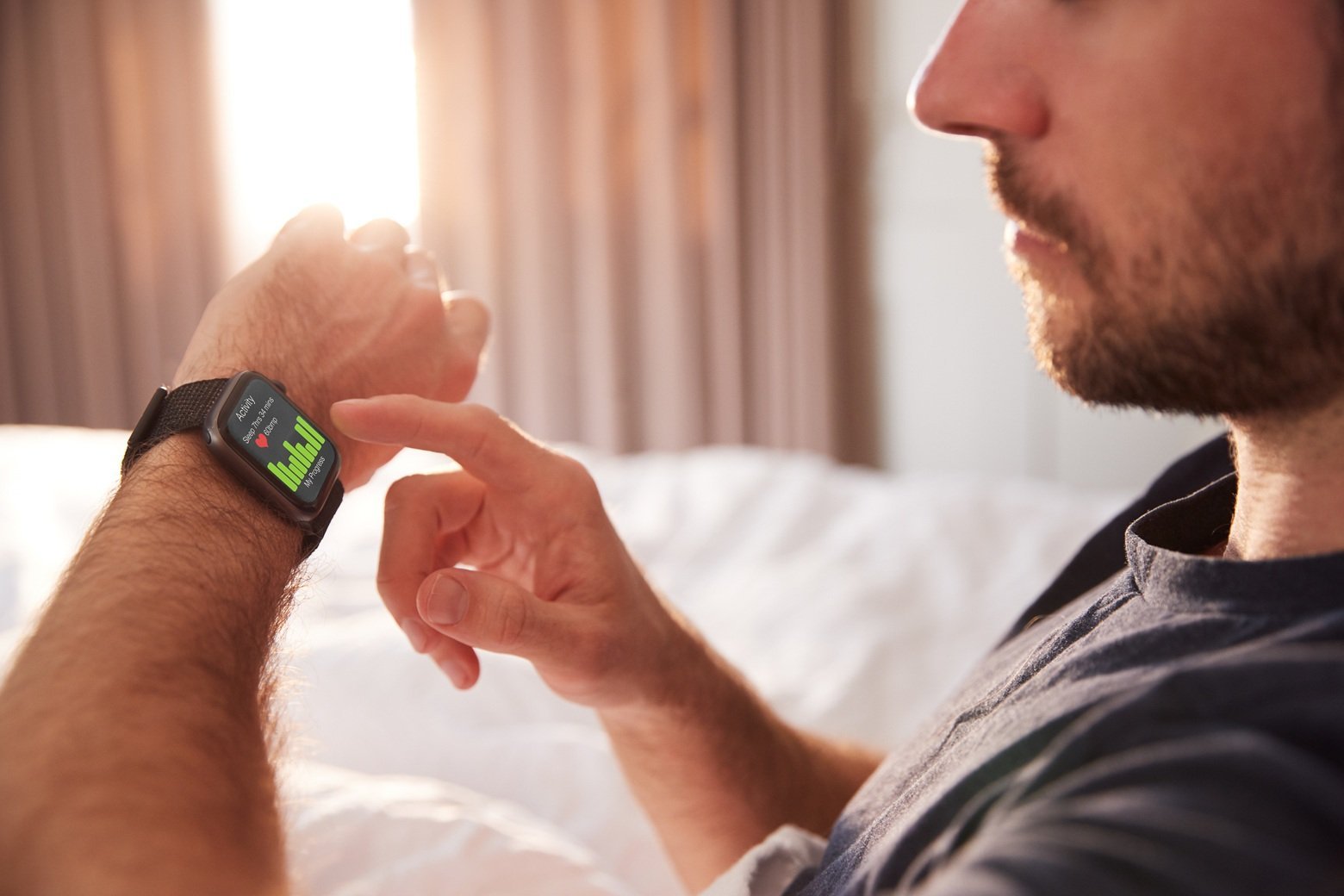
There is also a growing complication: wearable devices and sleep-tracking apps have made many people more aware of their sleep patterns — but for some, that awareness has produced its own form of anxiety. For some people, tracking sleep has actually made things worse — the worry about getting 'perfect' sleep data creates its own kind of tension that keeps them awake. Experts started calling it orthosomnia (7). The effort to sleep — the watching, the monitoring, the performance anxiety around rest — can activate precisely the arousal states that make falling asleep harder (7, 9).
Sleep is also unequally distributed. Those in lower-income households, those working irregular or multiple jobs, those with caring responsibilities for children or elderly relatives, those in communities with higher ambient noise or less safety — all tend to experience sleep disruption at higher rates (2). The wellbeing cost of sleep disruption, in other words, falls harder on those whose structural conditions already place the greatest demands on their resilience.
These tensions don't have simple resolutions. Naming them clearly — rather than collapsing sleep disruption into a personal management problem — is a necessary first step toward understanding what might actually support better rest.
The biology of sleep is itself the clearest guide to what the body needsin order torest
Understanding the biology of sleep does something useful: it shifts the frame from effort to conditions. The circadian clock is a biological mechanism responsive to its environment. Sleep pressure is a drive that builds and resolves according to its own logic. What this means, taken together, is that sleep disruption is rarely a character deficiency and often a conditions problem. The body’s sleep system, given the right environment, tends to do its work (1, 5).
A consistent thread in sleep science is that the conditions surrounding sleep matter as much as sleep duration itself — and that those conditions are often shaped by structural factors rather than personal choices (4, 10). The imbalance between biological time and social time, the way working culture bleeds into recovery hours, the design of digital environments that keep the nervous system activated into the night: these are features of an environment that has not, in many ways, been built around the requirements of human biology.
Understanding what sleep is and why it is disrupted is a necessary foundation for the conversation about what actually supports better sleep. The biology of sleep points toward conditions. And conditions, unlike willpower, are something that can be shaped collectively.
When wecan’trest,it’srarely only about sleep andit’sa signal worth listening to
Sleep disruption is, in a sense, one of the most honest signals available to us about the relationship between how we are living and what our bodies actually need. The gap between those two things — between the pace and structure of everyday life and the conditions the body requires to rest and recover — shows up in the quality of sleep more reliably than almost anywhere else.
This makes sleep worth taking seriously as a form of information. When we can't rest, it is often about the background level of activation the nervous system is carrying, the degree of genuine completion available in a given day, the safety and support structures around us, and the extent to which the environments we live in — digital, physical, social, organisational — are designed in ways that respect biological limits rather than override them.
A consistent thread in sleep science is that the consequences of disrupted sleep touch nearly every biological system — and that medicine has historically underweighted sleep relative to its actual role in physical and mental health. That observation has a straightforward implication: sleep is a foundation of human functioning, and the conditions that support it deserve to be taken seriously at every level, from the individual to the organisational.
The question that sleep disruption, understood clearly, tends to raise is: what would it mean to organise daily life — individually, collectively, institutionally — around the genuine requirements of human recovery? That question doesn't have a quick answer. Asking it honestly, rather than framing poor sleep as a matter of personal discipline, feels like a more useful place to begin.
References:
Franken P, Dijk D-J. Sleep and circadian rhythmicity as entangled processes serving homeostasis. Nature Reviews Neuroscience. 2023 Dec 01;25(1):43–59. https://doi.org/10.1038/s41583-023-00764-z
Panel CC, Watson NF, Badr MS, Belenky G, Bliwise DL, Buxton OM, Buysse D, Dinges DF, Gangwisch J, Grandner MA. Joint consensus statement of the American Academy of Sleep Medicine and Sleep Research Society on the recommended amount of sleep for a healthy adult: methodology and discussion. Sleep. 2015 Jul 31;38(8):1161–1183. https://doi.org/10.5665/sleep.4886
Caliandro R, Streng AA, van Kerkhof LWM, et al. Social jetlag and related risks for human health: a timely review. Nutrients. 2021;13(12):4543. https://doi.org/10.3390/nu13124543
Phillips AJK, Clerx WM, O'brein CS, Sano A, Barger LK, Picard RW, Lockley SW, Klerman EB, Czeizler CA Irregular sleep/wake patterns are associated with poorer academic performance and delayed circadian and sleep/wake timing. Scientific Reports. 2017 Jun 6;7(1):3216. https://doi.org/10.1038/s41598-017-03171-4
Edinger JD, Arnedt JT, Bertisch SM, Carney CE, Harrington JJ, Lichstein KL, Sateia J L MA, Troxel W M, Zhou E S, Kazmi U, Heald JL, Martin JL. Behavioral and psychological treatments for chronic insomnia disorder in adults: an American Academy of Sleep Medicine clinical practice guideline. Journal of Clinical Sleep Medicine. 2020 Nov 9;17(2):255–262. https://doi.org/10.5664/jcsm.8986
Baron KG, Abbott S, Jau N, Manalo N, Mullen R. Orthosomnia: are some patients taking the quantified self too far? Journal of Clinical Sleep Medicine. 2017; Feb 1413(2):351–354. https://doi.org/10.5664/jcsm.6472
He X, Pan B, Ma N, Li D, Kong W, Liu Q, Liu X, Wang X, Deng X, Yang K. The association of screen time and the risk of sleep outcomes: a systematic review and meta-analysis. Frontiers in Psychiatry. 2025 Dec 17;16:1640263. https://doi.org/10.3389/fpsyt.2025.1640263
Sletten TL, Weaver MD, Foster RG, Gozal D, Klerman EB, Rajaratnam SMW et al. The importance of sleep regularity: a consensus statement of the National Sleep Foundation sleep timing and variability panel. Sleep Health. 2023 Sep 7;9(6):801–820. https://doi.org/10.1016/j.sleh.2023.07.016
Van Dongen HPA, Maislin G, Mullington JM, Dinges DF. The cumulative cost of additional wakefulness: dose-response effects on neurobehavioral functions and sleep physiology from chronic sleep restriction and total sleep deprivation. Sleep. 2003 Mar;26(2):117–126. https://doi.org/10.1093/sleep/26.2.117
Yoo S-S, Gujar N, Hu P, Jolesz FA, Walker MP. The human emotional brain without sleep — a prefrontal amygdala disconnect. Current Biology. 2007 Oct 23;17(20):R877–R878. https://doi.org/10.1016/j.cub.2007.08.007
Xie L, Kang H, Xu Q, et al. Sleep drives metabolite clearance from the adult brain. Science. 2013 Oct 18;342(6156):373–377. https://doi.org/10.1126/science.1241224
Besedovsky L, Lange T, Haack M. The sleep-immune crosstalk in health and disease. Physiological Reviews. 2019;99(3):1325–1380. https://doi.org/10.1152/physrev.00010.2018